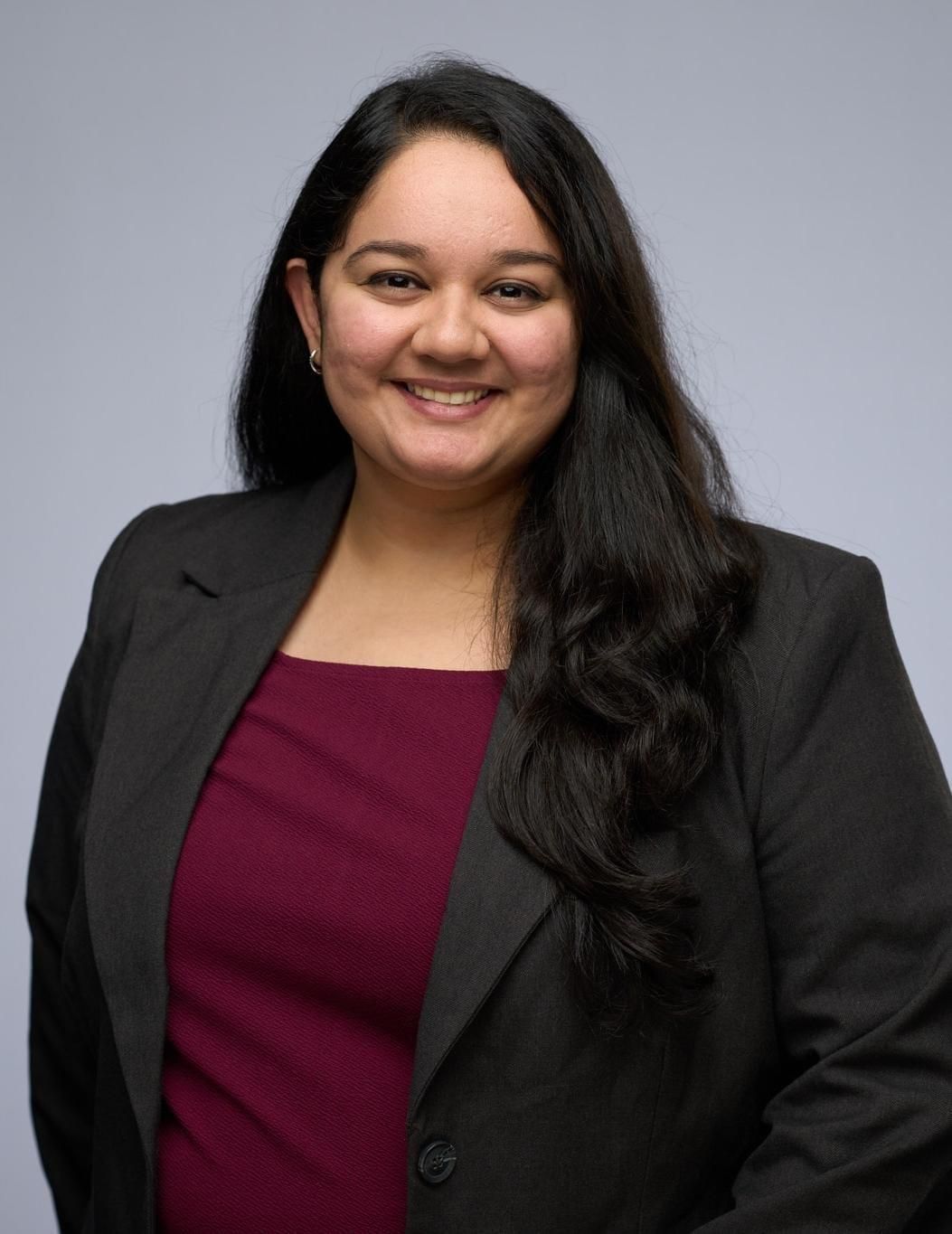
Prachi Shukla
Duke University · Sanford School of Public Policy
I'm a 5th year PhD candidate studying development, labour and gender. I'm particularly interested in families' decisions around childhood investments and intra-household bargaining. My current work examines how families are affected by policies such as alcohol regulation, inheritance laws, and rural school construction. I am a recipient of the von der Heyden Global Fellowship for the year 2026-27.
Prior to Duke, I worked as a Consultant at the World Bank (DIME) and as a Research Associate at J-PAL. I hold an MSc from the London School of Economics and a BA from St Xavier's College, Mumbai.
Working Papers
-
Heterogeneous Receipt of Social Assistance Programs Among Families with Low Income in the U.S.: The Role of State Policy DesignSocial assistance programs in the U.S. have made progress toward reducing child poverty, yet millions of households with children do not receive benefits as intended. We posit that households with children face heterogeneous costs—financial, cognitive, time, and information-based—in benefit eligibility, enrollment, and receipt which originate in features of state policy design and that household costs vary by ethnicity. We document substantial variation in social assistance benefit receipt rates across states that cannot be fully attributed to rates of poverty along the same geographic dimensions, with the most striking results for cash assistance receipt among Latino child households. Using microdata from the Current Population Survey, we show how features of state policies, constructed as indices informed by theories of cost minimization and administrative burden, predict rates of cash assistance among households with children after conditioning on their poverty status and demographics, in larger magnitudes among Latino families. Similar effects are not found among non-Latino families, nor for other in-kind programs such as the Supplemental Nutrition Assistance Program. Findings are robust to alternative measures of benefit receipt using Transfer Income Models (i.e., TRIM3) simulations and when generating estimates with data from the Survey of Income and Program Participation.
-
De Jure Policy Design and De Facto Implementation of Cash Assistance Programs: Evidence of Differential Receipt among Latino FamiliesEconomic evaluations of the receipt of social assistance programs typically focus on the effect of de jure program design (policy intent). With novel survey data from practitioners across 11 U.S. states, this study offers a first combined look at de jure and de facto implementation features of basic cash assistance programs. We pay particular attention to the differential influence those have among Latino families with children, the largest group residing in poverty but yet receiving social assistance at lower rates than peers. We find that both de jure policies and de facto implementation practices that minimize operational costs—as posited by economic theories of resource allocation—reduce cash assistance receipt rates across all households with children. De jure policies that increase administrative burden also reduce cash assistance receipt but less precisely than policies that minimize operational costs; collectively de facto practices have a larger impact on cash assistance receipt rates than de jure policies. Reductions on cash assistance receipt in response to de jure policies and de facto practices that minimize operational costs are largest among Latino households with children; de facto practices that increase administrative burden on the other hand have the largest effects among non-Latino households. Findings are robust to controls for family, household, and state-level characteristics.
Works in Progress
-
Alcohol Access and Household Welfare: Evidence from India's Highway Liquor BanHow do households respond to large regulatory shocks that alter access to temptation goods? This paper studies India's 2017 highway liquor ban, which prohibited liquor outlets within a fixed distance of national and state highways. I construct treatment intensity using spatial data and combine it with monthly household expenditure data and health outcomes. I find that more exposed households reduce liquor purchases and alcohol expenditure share after the ban, with no corresponding change in total expenditure or total income. I also find significant declines in spending on other temptation goods, including tobacco and snack foods. Despite these reductions in alcohol spending and a significant increase in female labour force participation, reported intimate partner violence increases, particularly among poorer and rural households.
-
Primary School Expansion and Girls' Life Trajectories: Long-Run Evidence from IndiaI study the long-run impacts of India's District Primary Education Programme (DPEP)—the world's largest school expansion initiative, launched in the 1990s. Using a district-by-cohort difference-in-differences design, I estimate both direct and indirect effects on educational attainment, marriage, fertility, and social connections. I find substantial and persistent gains in schooling among girls, as well as delayed marriage, lower fertility, and stronger natal family linkages.
-
Impact of Inheritance Laws on Marriage Markets and Education Investment in IndiaI study the effects of amendments to the Hindu Succession Act that granted women equal inheritance rights to ancestral property. Using a difference-in-differences approach that exploits staggered state-level reforms and legal exclusions for minorities, I find that families respond through compensatory investments: girls with brothers receive more schooling and lower dowries, while boys without sisters gain both in education and marriage market premiums.
Published Work
-
The Crisis Behind Closed Doors: Domestic Workers' Struggles During the Pandemic and Beyond
Teaching Experience
- PUBPOL 402 / ECON 308 — Empirical Methods for Social Progress Co-Instructor · Prof Lisa Gennetian · Spring 2026
- PUBPOL 810 — Microeconomics and Public Policy-Making TA · Dr Matthew Johnson · Fall 2025
- Math Camp — Economics & Mathematics for Incoming MPP Students TA · Fall 2025, 2026
- PUBPOL 303 — Microeconomic Policy Tools Head TA · Prof Lisa Gennetian · Spring 2024
Teaching Statement
I am a fifth-year PhD candidate in Public Policy at Duke University, with an economics concentration and research interests in development economics, gender, education and household decision-making. My teaching experience spans undergraduate and graduate quantitative courses in microeconomics and empirical methods. I have served as Head Teaching Assistant for Microeconomic Policy Tools, Teaching Assistant and guest lecturer for Microeconomics and Public Policy-Making, and Co-Instructor for Empirical Methods for Social Progress. I have also supported incoming MPP students during orientation-week preparatory classes in mathematics, statistics, Excel and economics. Across these roles, I have designed instructional materials and assessments, taught sections and lectures, graded and provided feedback, held office hours and coordinated with other teaching assistants. My teaching is shaped by three commitments: making quantitative reasoning visible, recognizing differences in students' prior preparation and creating opportunities for students to use feedback to develop increasingly independent analytical skills.
A1 — Designing and Planning for Learning Activities
When designing learning activities, I try to make complex analytical tasks manageable by breaking them into components that students can practice and build upon (K1, K2). As a Co-Instructor for PUBPOL 402 / ECON 308, Empirical Methods for Social Progress, I developed the Stata component of the course, including instructional materials and assignments. I designed Stata homework to mirror the kinds of independent empirical tasks students would later complete in their research projects, so that students became comfortable using the software as an analytical tool rather than treating coding as a separate technical exercise (K4). I also updated these materials to reflect the empirical methods and coding practices students are likely to encounter in contemporary research settings (V3, V4).
The course concluded with developing an empirical research paper, and earlier assignments helped students build toward it in stages. Students first proposed a research question, data and empirical strategy; next, they wrote a short literature discussion and produced a summary-statistics table; and later, they created an analysis table and graph before completing the final paper. This sequence gave students repeated opportunities to apply course methods, receive feedback and revise before being asked to integrate the pieces independently (V2). I also developed rubrics and a package of grading resources for future teaching assistants, helping make expectations more transparent and supporting consistency across future iterations of the course (V5, K5).
A2 — Teaching and Supporting Student Learning
My teaching has often involved quantitative courses in which students enter with very different levels of prior preparation. In PUBPOL 810, Microeconomics and Public Policy-Making, I led weekly sections for MPP students with a range of prior exposure to economics. I learned that teaching the same material in the same way did not necessarily give all students the same opportunity to engage with it (V1, K1).
I therefore began each section with a short three-question quiz. When many students missed a question, I reviewed the concept with the full class; when only a few struggled, I offered to work through it at the end of section so those students could receive additional support without slowing the pace for everyone (V2, K2). I also found that students new to economics often struggled with the intermediate steps in a graph or mathematical problem. Rather than relying heavily on prepared slides, I worked through these problems on the board so students could see the reasoning develop step by step and ask questions as we proceeded (K2). Because MPP students are learning economics to apply it to policy, I also use examples from areas such as education, health and the environment to show where abstract concepts appear in real policy problems (V4, K2). These practices also grew out of earlier student feedback that I sometimes moved too quickly, particularly for students without previous economics coursework (K3).
A3 — Assessing and Giving Feedback for Learning
I view assessment as part of the learning process rather than solely as a way of assigning grades. Across PUBPOL 810 and PUBPOL 402 / ECON 308, I made a point of providing written comments on students' online submissions, including assignments graded primarily for completion. When appropriate, I also provided answer keys after deadlines so students could compare their reasoning with a complete solution (V2, K3).
I have also worked to make assessment consistent and transparent. As Head TA for PUBPOL 303, Microeconomic Policy Tools, I collaborated with the professor to develop problem sets, quizzes, examinations and grading rubrics. I coordinated grading standards among three other teaching assistants so that students in different sections were evaluated according to common expectations (V1, V5, K5). In PUBPOL 402, feedback on the staged empirical assignments was designed to be useful for later work: students could revise their research design, descriptive analysis and empirical methods before submitting the final paper. In office hours, I often discussed written feedback with students and helped them think through how to incorporate it into subsequent versions of their work. This feedback loop allowed assessment to support improvement rather than simply document performance (K1, K3).
A4 — Supporting and Guiding Learners
Some of the most important learning support I provide happens outside formal class time. I regularly hold office hours where students can revisit concepts, work through feedback, or ask questions they may not have wanted to raise during class. In economics courses, this has often meant returning to foundational concepts or mathematical reasoning; in empirical methods, it has included helping students think through revisions to their research projects (V1, K1).
I have also supported students at transition points in their programs. During the MPP orientation workshops, I helped maintain instructional materials, graded tests and assignments, and created a system for tracking attendance, homework, and test performance that contributed to placement decisions for introductory or advanced economics and statistics courses (K4). This experience made me especially aware that differences in preparation are not the same as differences in students' capacity to succeed. As Head TA for PUBPOL 303, I served as the first point of contact for many student concerns, resolving issues when I could and involving the professor when appropriate. Across these settings, I try to make it clear that seeking clarification and additional support is a normal part of learning (V1, V2).
A5 — Engaging in Professional Development as a Teacher
My teaching practice has developed through student feedback, collaboration with faculty and other teaching assistants, and structured professional development. One especially useful piece of feedback came during my earlier teaching in PUBPOL 303, when students noted that I sometimes moved too quickly for those without prior economics experience. Although my overall teaching evaluations were strong, this comment changed how I approached later courses. In PUBPOL 810 and PUBPOL 402, I became more deliberate about pacing, checking students' understanding, and making intermediate reasoning visible (K3).
I have continued this reflective process through Duke's Certificate in College Teaching and Teaching Triangles. Observing peers gave me concrete practices I could bring into my own sections, including clearer transitions, timed activities, and more deliberate use of relatable policy examples. I subsequently began stating a simple agenda at the start of class, timing activities more intentionally, and pausing during problem-solving to ask what a technical step was helping us understand in the larger policy question (V3, V5, K3). Teaching Triangles also reinforced the value of learning from colleagues and treating teaching as a collaborative practice. My work as a Head TA complements this by requiring coordination of section content, grading expectations, and responsibilities across instructors (V5, K5). Together, these experiences have made my teaching more intentional and reflective.
Integrate & Reflect
Across my teaching experiences, I have become increasingly attentive to how students learn quantitative material and to the different levels of prior preparation they bring into the classroom. My goal is not only for students to arrive at the correct answer, but to understand the reasoning that gets them there and to become more confident applying that reasoning independently. This is why I emphasize making analytical steps visible, using assessment to identify where students are struggling, and giving students opportunities to revise and build on feedback. I also try to connect abstract economic and empirical concepts to policy questions students already care about, so that technical skills feel purposeful rather than isolated. Across course design, classroom teaching, assessment and student support, I aim to create a learning environment in which students can ask questions, make mistakes, and gradually take greater ownership of complex analytical work.
Looking Ahead
As I continue developing as an instructor, I hope to deepen the connection between my teaching and my research in development economics and public policy. I would like to teach courses in microeconomics, empirical methods, development economics and policy analysis, and to design assignments that allow students to work with real data and policy questions while developing rigorous analytical skills. I also want to continue improving how I teach students with varied quantitative backgrounds, particularly through active learning and applied examples that make technical material more accessible without reducing its rigor. My experience with Teaching Triangles and the Certificate in College Teaching has reinforced the value of observing colleagues, seeking feedback, and experimenting with small changes in practice. I plan to continue using those forms of professional development as I take on greater responsibility for course design and instruction.